When a Nor’easter moves up the coast, you feel it in Gloucester long before the lights flicker. Heavy wind, salt spray, and coastal flooding can knock out power for days. If you rely on a sump pump, a boiler or furnace blower, or critical medical devices, being ready is not optional.
This guide walks you through practical backup power choices for Gloucester homes, how to size a system for your essentials, coastal siting tips, safety musts, and what permits to expect. You’ll leave with a clear plan you can act on before the next storm arrives. Let’s dive in.
Backup power types
Portable generators
Portable gasoline or inverter generators sit on wheels or a small frame and can be set up quickly. They are affordable, widely available, and inverter models deliver cleaner power for electronics. You will need to set them up outdoors, refuel them by hand, and manage which circuits you power.
Best fit: Short outages or running a few essentials like a sump pump, fridge, lights, and Wi‑Fi for a day or two. Inverter models are quieter and easier on sensitive electronics.
Pros: Lower cost, flexible use, quick to source and deploy. Cons: Manual operation and refueling, gasoline shelf life limits, and they typically power a subset of circuits unless you have a proper transfer solution.
Standby generators
Standby systems are permanently installed and typically run on natural gas or propane. Paired with an automatic transfer switch, they start themselves when utility power fails and can run much of your home.
Best fit: Multi‑day outages where you want hands‑free operation for heating components, pumps, refrigeration, and more. Expect permitting, a pad, and professional installation.
Pros: Automatic operation and larger capacity. Cons: Higher upfront cost, ongoing maintenance, and careful siting in flood‑prone coastal zones.
Diesel generators
Diesel units are common for heavy loads and long runtimes. They are durable but bring storage rules, cold‑weather starting needs, and louder operation. They are less common for small residential use in Massachusetts and may trigger additional storage permitting.
Battery and solar storage
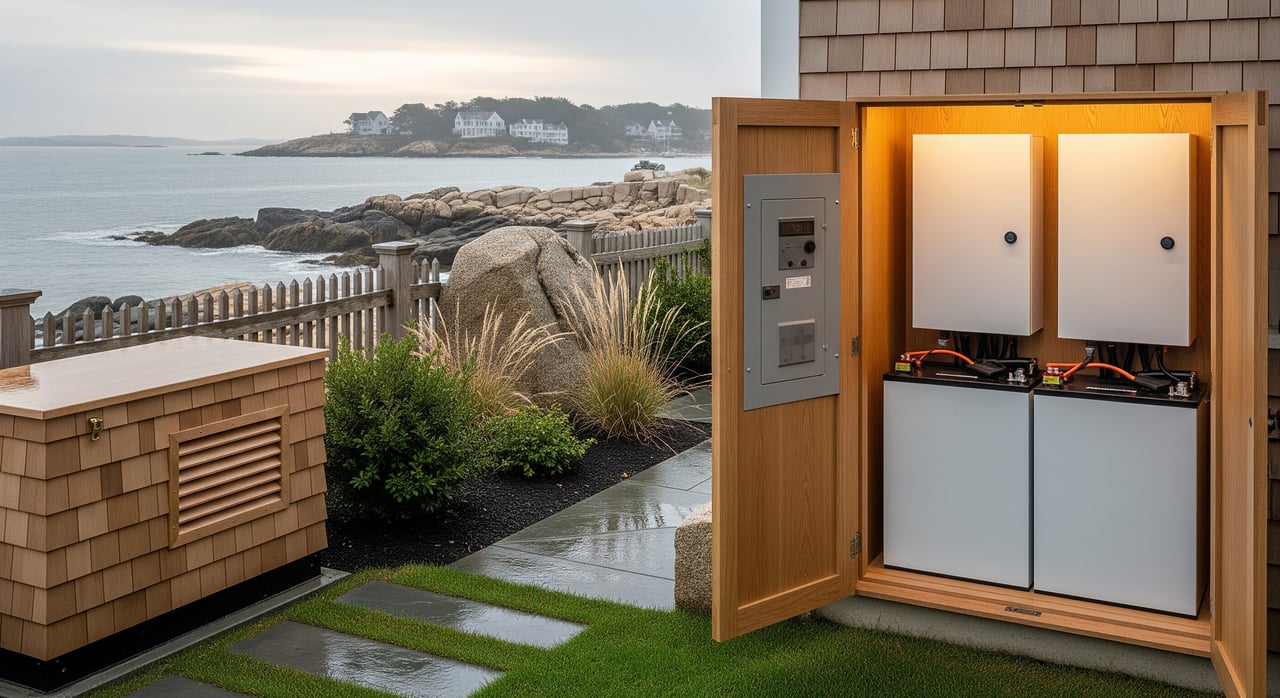
Home batteries and portable power stations deliver silent backup power with no on‑site combustion. With the right inverter, they switch over instantly and are excellent for refrigeration, communications, and medical devices. Pairing with solar can extend autonomy when weather clears.
Pros: Quiet, no carbon monoxide risk, low maintenance. Cons: Higher upfront cost per kWh and limited capacity for high‑starting‑current loads unless specifically sized.
Hybrid setups
Many Gloucester homeowners mix solutions. A standby unit can handle high‑draw loads like a sump pump and furnace components, while a battery keeps your network and lighting stable. A small portable can serve as a contingency if fuel deliveries are delayed.
Fuel choices for Gloucester
Natural gas
A continuous utility supply can carry you through longer outages if service remains available. You must already have gas service at the property and should check your utility’s policies on standby use and any restoration priorities.
Propane (LP)
Propane is popular for local standby systems. You store it on‑site in a tank sized for many days of runtime. Plan for tank permits, refills, and placement that respects setbacks and flood rules.
Diesel
Diesel offers dense energy for extended runtimes and is favored for large generators. In winter, it needs cold‑flow additives or heaters and may face stricter storage requirements.
Gasoline
Gasoline fuels most portable units and is easy to buy. It has a short shelf life without stabilizer, is hazardous to store in quantity, and is not suited for unattended long runs.
Electricity and batteries
If you charge before a storm, battery backup sidesteps fuel shortages. Plan for capacity that covers your needs and a recharge source such as solar for longer events.
Cold weather and coastal realities
- Winter performance: Propane and natural gas generally perform better than gasoline in the cold. Diesel needs additives or heaters. Batteries lose some performance in low temperatures, so thermal management and proper enclosures matter.
- Delivery disruptions: Nor’easters can delay fuel deliveries. Maintain several days of reserve when possible, especially for propane.
- Salt‑air corrosion: Salt spray accelerates corrosion. Choose enclosures and hardware rated for coastal conditions, use stainless fasteners, and clean and inspect equipment more often. Sheltered placement and protective coatings help extend lifespan.
- Flood and elevation: If you are in a FEMA flood zone, place and elevate generators, fuel tanks, and batteries to meet floodplain requirements. When possible, elevate above the Base Flood Elevation or use flood‑rated equipment and anchoring approved by local authorities.
Safety you cannot skip
- Carbon monoxide: Never run a generator indoors or in an attached garage. Place portable and standby units outdoors with the manufacturer’s minimum distance from doors, windows, and vents. Many recommend 15 to 20 feet or more.
- Backfeed prevention: Never connect a generator directly to household wiring. Use an approved transfer switch or interlock kit installed by a licensed electrician to protect utility workers and your equipment.
- Grounding and ventilation: Follow the manufacturer’s instructions and National Electrical Code requirements for grounding, bonding, and airflow.
- Fuel handling: Store fuel in approved containers and within local fire code limits, away from living spaces and ignition sources. Use stabilizers for gasoline if it will be stored.
- Load management: Do not overload the generator. Understand the difference between running watts and starting watts for motors and compressors.
Permits and utility steps
Permanent standby systems and fuel tanks require permits and inspections. Expect the following in the Gloucester area:
- Building permit: For permanent installations such as the generator, concrete pad, and enclosures.
- Electrical permit and inspection: A licensed electrician must install transfer equipment and connections to meet the Massachusetts electrical code and the NEC, followed by inspection.
- Fuel storage permits: Above‑ground LP tanks or diesel storage often require fire department permits and adherence to setbacks. Underground tanks have additional rules.
- Fire department notification: The fire department may inspect fuel and ventilation arrangements.
- Utility coordination: Contact your electric utility before tying into your service. You may need an interconnection agreement, testing, and a visible disconnect. If you plan to use natural gas, ask the utility about any standby considerations.
- Floodplain and zoning: If your property sits in a floodplain or has coastal overlay controls, additional siting and elevation standards may apply.
Local tip: Call the Gloucester Building Department and the Gloucester Fire Department before you buy. Ask about the exact permit forms, setbacks, and inspection process. Then call the number on your electric bill to coordinate utility requirements for safe interconnection.
Right‑size your system
Define essential loads
Start by listing what you must keep on during a winter outage. Common priorities include:
- Sump pumps
- Heating system components such as a furnace or boiler circulator and blower
- Refrigerator and freezer
- Well pump if applicable
- Medical equipment
- Lights and communications such as Wi‑Fi and phone charging
- Garage door opener and basic outlets for tools or safety gear
High‑draw electric equipment like baseboard heat, electric ranges, or electric water heaters can require much larger systems. Decide whether those are essential or can wait.
Estimate running vs starting watts
Every appliance has running watts and some have higher starting watts. Note both from the nameplate or manual. Typical ranges include:
- Refrigerator: running 100 to 800 W; starting 1,200 to 2,000 W
- Sump pump: running 500 to 1,500 W; starting 1,000 to 3,000 W
- Well pump: running 800 to 2,500 W; starting 1,500 to 5,000 W
- Furnace fan or blower: 300 to 1,500 W
- LED lights: 5 to 15 W per fixture
- Laptop and router: 50 to 200 W total
- CPAP or similar device: 30 to 150 W
A simple approach is to add the running watts and select a generator with enough continuous output to cover that number with some margin. Then make sure the surge capacity handles the largest starting load. If multiple motors could start at once, factor that in.
Example: Sump pump (starting 2,000 W, running 800 W), refrigerator (starting 1,500 W, running 300 W), furnace blower (running 800 W), and lights and communications (300 W). Running total is about 2,200 W. The largest surge is 2,000 to 3,000 W. A generator with 3,500 to 4,500 W continuous output and 4,000 to 5,000 W surge offers a reasonable margin.
Choose a transfer solution
- Manual transfer switch or interlock: Lower cost but you will start and connect the generator manually. Must be installed by a licensed electrician and meet code.
- Automatic transfer switch: Starts a standby generator and switches loads without your help. This is the preferred option for whole‑house systems or when you may be away.
Maintenance and testing
- Exercise runs: Follow the manufacturer’s schedule. Weekly or monthly 30‑minute runs are common to keep systems ready and fuel fresh.
- Oil and filters: Change after break‑in and at scheduled intervals.
- Pre‑storm: Top off propane, verify battery state of charge, add stabilizer to stored gasoline, and check that vents are clear if salt spray has accumulated.
- Post‑storm: Inspect for water intrusion, corrosion, leaks, and any loose connections.
Costs and timeline
- Portable generators: About $300 to $3,000 depending on size and inverter features.
- Standby systems: Commonly $5,000 to $20,000 or more installed, depending on capacity, pad, fuel hookup, permits, and site work.
- Diesel or large standby: Higher ranges with additional site needs.
- Battery backup: About $8,000 to $30,000 or more depending on storage capacity and inverter work.
- Annual maintenance: Often several hundred dollars per year for a standby system under a service plan.
A typical standby project runs 3 to 12 weeks from decision to commissioning. Plan a few days to two weeks for load sizing, 1 to 6 weeks for permits and utility steps, several days to weeks for equipment procurement, and 1 to 5 days on site for installation and inspections.
Your Gloucester action plan
- List your essential loads and write down or photograph the nameplate wattages.
- Decide whether you want automatic operation with an ATS or manual operation with a portable.
- Call the Gloucester Building Department and Gloucester Fire Department for permit and fuel tank rules.
- Contact your electric utility about interconnection and backfeed prevention requirements.
- If your home is coastal or in a flood zone, confirm elevation requirements and anchoring for equipment and tanks.
- Get multiple quotes from licensed installers who understand coastal siting and corrosion mitigation. Ask for a written load calculation and maintenance plan.
- If choosing portable, install carbon monoxide detectors and plan safe outdoor placement and fuel storage.
- If choosing batteries, confirm winter performance, enclosures, and motor‑load compatibility.
Backup power is about comfort, but in winter it is also about safety. A thoughtful plan that respects coastal conditions, local permits, and sound load sizing will carry you through the next Nor’easter with less stress and more control.
Ready to align your backup power plan with your next move or sale in Gloucester? Connect with Unknown Company to Request a Red‑Carpet Listing Consultation and get local guidance tailored to coastal living.
FAQs
What backup power works best for Gloucester winters?
- Standby generators on propane or natural gas perform well in cold weather and can run for days, while a portable inverter can cover essentials for shorter outages.
How big should my generator be for a sump pump and heat?
- Add the running watts for your sump pump, refrigerator, furnace blower, lights, and Wi‑Fi, then ensure surge capacity covers the largest motor start. Many homes land near 3,500 to 4,500 W continuous with 4,000 to 5,000 W surge for these essentials.
Do I need a permit for a standby generator in Gloucester?
- Yes. Expect building and electrical permits, possible fire department review for fuel storage, and utility coordination for interconnection.
Where should I place a generator near the coast?
- Place it outdoors away from openings, elevate it if you are in a flood zone, and use corrosion‑resistant enclosures and hardware rated for coastal environments.
Is a battery system enough for multi‑day outages?
- Batteries are excellent for refrigeration, communications, and medical devices. For extended outages or high‑starting‑current loads, many homeowners pair batteries with a standby or portable generator.
How far from the house should I run a portable?
- Follow the manufacturer’s minimum distance from doors, windows, and vents. Many recommend 15 to 20 feet or more to reduce carbon monoxide risk.