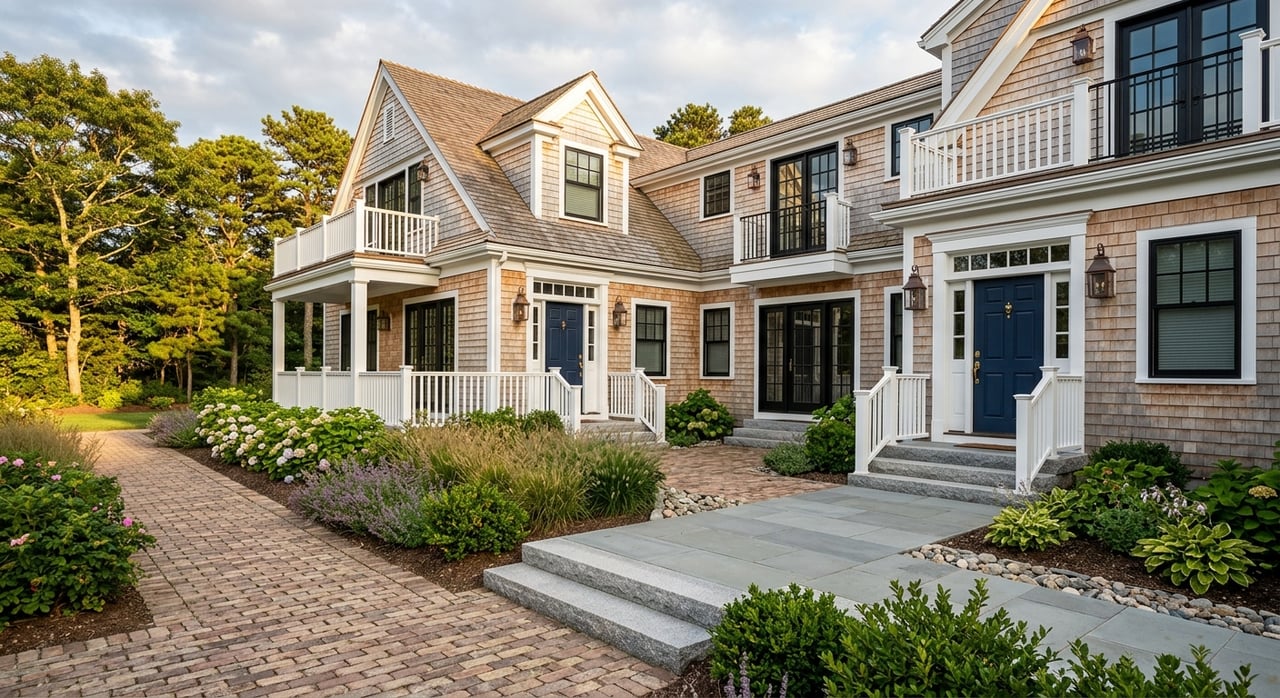
Best North Shore Towns For Downsizing To The Coast
May 7, 2026
May 7, 2026
If you love the North Shore but do not want the upkeep that comes with a larger home, you are not alone. Many buyers reach a point where less maintenance, easier walkability, and better day-to-day convenience matter more than extra square footage. The good news is that the coast offers several strong options, but each town serves a different downsizing goal. Let’s dive in.
On the North Shore, downsizing rarely means moving into a brand-new ranch neighborhood with endless single-level inventory. In most cases, it means looking at a first-floor condo, an elevator building, an accessory dwelling unit, or a smaller older house with a more manageable footprint.
That matters because each town has a different housing pattern. Some offer more multifamily and mixed-use housing, while others are still shaped mainly by older single-family homes. If you want a lower-maintenance coastal move, your best match depends on whether you care most about harbor character, beach access, walkability, or housing variety.
Here is the simplest way to think about the main options for downsizing to the coast:
Town | Best Fit For | Housing Feel | Recent Price Context |
|---|---|---|---|
Marblehead | Harbor-town lifestyle | Limited supply, many single-family homes | March 2026 median sale price: $830,000 |
Swampscott | Beach-town condo living | Tight market, some condo appeal | March 2026 median sale price: $857,000 |
Salem | Walkability and transit | More multifamily and condo options | March 2026 median sale price: $582,500 |
Beverly | Best overall balance | More housing variety and coastal access | March 2026 median sale price: $804,000 |
These towns do not follow a simple price ladder. Salem had the lowest recent median sale price in this group, while Marblehead held the highest owner-occupied housing value in Census QuickFacts at $943,900. Beverly, Swampscott, and Marblehead can all trade at the upper end depending on product type and timing.
If your ideal move includes moored sailboats, historic streets, and a classic coastal setting, Marblehead remains the benchmark. The town has 18 open public ways, including eight in downtown and ten on Marblehead Neck, along with parks, beaches, trails, and foot-path shortcuts that support a scenic, connected lifestyle.
Marblehead also has one of the busiest harbor complexes in New England, with harbor areas that can support a potential 3,000 moorings. For buyers who want to stay close to boating, waterfront views, and a distinctly historic coastal feel, that is hard to replicate.
The tradeoff is inventory. Marblehead’s housing plan says 77% of housing units are single-family homes, less than 3% of the housing stock has been built since 2000, and about 60% of multifamily units were built before 1940.
In plain terms, Marblehead is not the easiest place to find a broad mix of condos or true single-level homes. It is better framed as a premium lifestyle market with constrained choices, where you may need to be flexible on layout, age of home, or timing.
Marblehead can be a strong fit if you want:
You should also expect:
If your version of coastal living is more about the beach than the harbor, Swampscott deserves a close look. The town describes itself as a small beach community along the Atlantic Coast, and it also offers commuter rail and bus service.
For downsizers, the key story is that Swampscott has some condo appeal but remains a built-out, competitive market. Its housing production plan says only 10% of dwelling units are in larger multifamily structures, and most of those are condominiums.
That makes Swampscott a natural fit if you want a beach-town feel and are open to condo living. At the same time, it is not a bargain market. Recent March 2026 median sale price data placed Swampscott at $857,000.
Swampscott may be right for you if you want:
Keep in mind:
For many downsizers, Salem offers the clearest low-maintenance story. The city is served by the MBTA Newburyport/Rockport commuter rail line and multiple bus routes, with Salem Station at the northern end of Washington Street for easy access to downtown.
Salem also stands out for day-to-day convenience. The city highlights downtown restaurants, retailers, arts, and cultural destinations, and local planning materials note that residents value walkability and transit.
From a housing standpoint, Salem offers more variety than the other towns in this comparison. An older city plan described the housing stock as heavily two-family and multifamily, with 2 to 4 unit buildings making up 38% of units, 5 to 19 unit buildings at 14%, and 20+ unit buildings at 15%.
The city also allows accessory dwelling units by right and describes them as affordable, age-friendly, low-impact housing. Its Housing Road Map executive summary says 457 units had been converted into condos since 2016, equal to about 5% of occupied rental units.
That combination helps explain why Salem is often the best fit for buyers who want to simplify without giving up access to restaurants, culture, and transit. It also had the lowest recent median sale price in this group at $582,500.
Salem may be the best choice if you want:
Salem tends to suit buyers who are comfortable with:
If you want a little bit of everything, Beverly is often the most balanced answer. The city describes itself as a coastal community with a working waterfront, public boat slips and moorings, a thriving downtown, and four commuter rail stations.
That mix gives Beverly an edge for buyers who want coastal access without giving up convenience. Local harbor and waterfront planning also emphasizes public walkways, parks, and access to restaurants, businesses, and open spaces.
Beverly is also more flexible from a housing perspective. Its accessory dwelling unit ordinance allows ADUs by right in most single-family residential districts, and the city’s housing and planning materials support greater housing diversity and continued growth.
This is why Beverly often stands out as the best compromise. You can still enjoy waterfront energy and rail access, but with more housing variety than Marblehead or Swampscott. Recent March 2026 median sale price data put Beverly at $804,000.
Beverly is a smart fit if you want:
You should still expect:
The best North Shore town for downsizing depends on what you want your next chapter to feel like. A beautiful move on paper is not always the right move in real life.
Start by asking yourself which of these matters most:
Then think about the home itself. If low maintenance is your top priority, Beverly and Salem often offer the clearest path because of their greater housing variety, multifamily orientation, and active ADU policies. If lifestyle comes first and you are willing to wait for the right fit, Marblehead and Swampscott can still be very compelling.
Before you make a move, it helps to define your non-negotiables early. In this market, the right downsizing plan is often less about square footage and more about matching your daily life to the right town and housing type.
A helpful shortlist might include:
That kind of clarity can save time and help you focus on the towns that truly fit your goals.
If you are weighing a move from a larger North Shore home into something more manageable, a local, town-by-town strategy makes all the difference. Michael Cannuscio can help you compare lifestyle, inventory, and timing across Marblehead, Swampscott, Salem, and Beverly so your next move feels simpler, smarter, and well aligned with how you want to live.

We pride ourselves in providing personalized solutions that bring our clients closer to their dream properties and enhance their long-term wealth. Contact us today to find out how we can be of assistance to you!
THE AGENCY MARBLEHEAD
72 Front Street, Suite 6, Marblehead, MA 01945