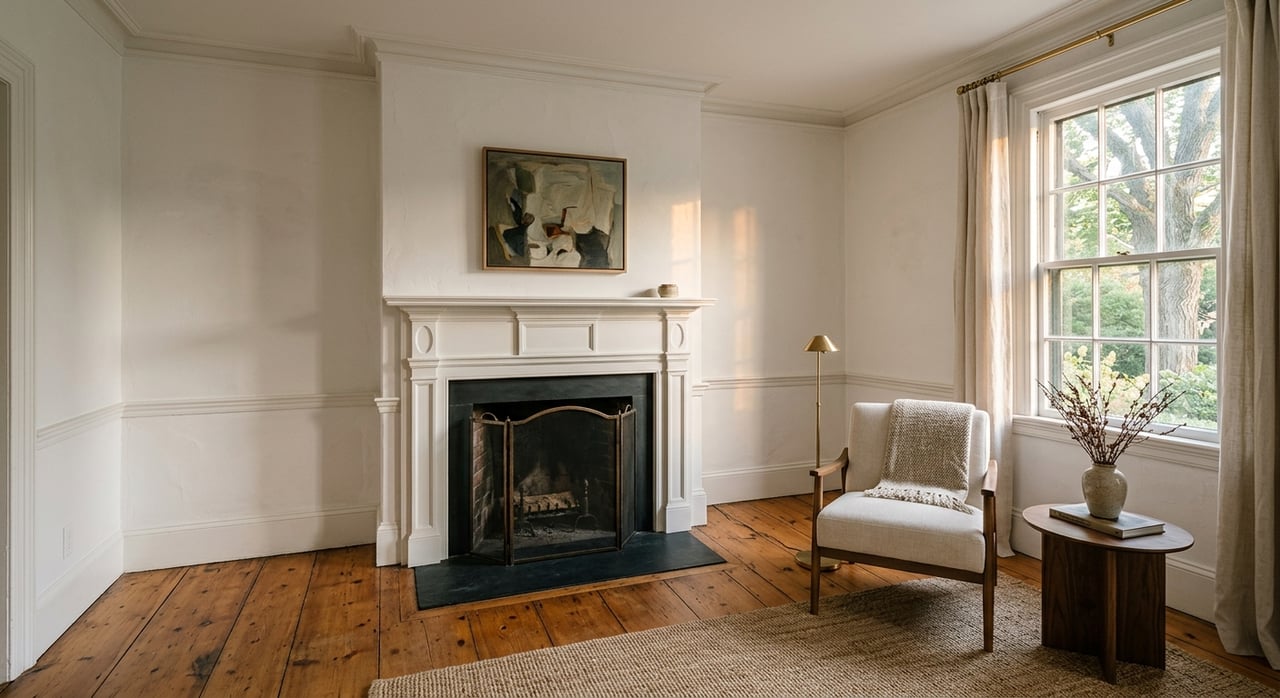
Historic Homes In Salem: Renovation, Value, Resale Considerations
May 21, 2026
May 21, 2026
If you are drawn to Salem’s historic homes, you are not alone. Few places on the North Shore offer the same mix of architectural depth, period detail, and lived-in New England character. If you are thinking about buying, renovating, or eventually selling one of these properties, it helps to understand where charm meets responsibility. Let’s dive in.
Salem’s housing stock spans several centuries, which is part of what makes the market so compelling. You can find first-period and Georgian-era homes, along with Federal, Greek Revival, Victorian, Colonial Revival, and some mid-20th-century properties across the city.
One of Salem’s best-known historic areas is the McIntire District, which includes 424 properties and is recognized for its concentration of pre-1900 domestic structures. Salem’s preservation planning also identifies Second Empire, Gothic Revival, Queen Anne, Shingle, Colonial Revival, and mid-century modern, Ranch, and Split-level examples throughout the city.
For buyers, that variety creates real opportunity. For owners, it also means the details matter. In Salem, original windows, doors, porches, roofs, fences, and paint choices are not just cosmetic features. They are part of how a home’s character is understood and valued.
Before you start an exterior project, you need to know whether the property sits in one of Salem’s four local historic districts: McIntire, Derby Street, Lafayette Street, or Washington Square. In these districts, the Salem Historical Commission reviews many types of visible exterior work.
If a change is visible from a public way, it generally requires a Certificate of Appropriateness. If the work is not visible from a public way, it may qualify for a Certificate of Non-Applicability. Ordinary maintenance or repair that does not change the design, material, color, or outward appearance may be exempt.
This is where many owners get surprised. The review process can affect additions, windows, porches, decks, skylights, siding, fences, chimneys, roofs, paint colors, satellite dishes, solar panels, and demolition. Salem also publishes separate policies for items like chimney caps, gutter replacement, and architectural roof shingles.
The key takeaway is simple: assume even a small exterior change may need review before work begins. Unauthorized work can trigger fines of up to $500 per day, so early planning is much easier than trying to fix a problem later.
Not every update adds value equally in a historic home. In Salem, the strongest renovation strategy is usually the one that protects visible character while improving function behind the scenes.
Historic windows are one of the clearest examples. National Park Service guidance recommends retaining and repairing historic wood windows whenever possible. Weatherstripping and storm windows can improve performance, and if replacement is necessary, the new window should preserve the original proportions, muntin profiles, and overall character.
In Salem’s historic districts, the local standard is even tighter. Replacement windows must be wood, while vinyl- or aluminum-clad exteriors are not accepted. Reflective glass is also not considered appropriate.
For resale, this matters. Buyers looking at historic homes in Salem often notice window quality quickly, even if they cannot name every architectural detail. A house with thoughtfully maintained or properly restored windows tends to feel more authentic and better cared for.
Water management is another major issue in older houses. Salem’s guidelines warn that vinyl and aluminum siding can damage architectural integrity and may trap moisture behind the wall.
That makes gutters, flashing, roof drainage, and paint upkeep more important than many owners expect. The city encourages copper gutters, and gutters and downspouts should be as unobtrusive as possible. In practical terms, keeping water away from the structure is one of the most important ways to protect both the house and its long-term value.
Energy improvements can absolutely make sense in a historic Salem home, but they should be planned with care. National Park Service guidance notes that weatherization, storm windows, and careful window repair can improve efficiency without sacrificing original materials.
Poorly planned mechanical retrofits can do the opposite. They may remove historic fabric, weaken structural systems, or create moisture problems. If you are upgrading HVAC or insulation, the goal should be to improve comfort while preserving as much original material as possible.
Lead safety should be part of the plan in many older Salem properties, especially homes built before 1978. The EPA states that renovation, repair, and painting work in pre-1978 homes can create significant lead dust.
This risk is especially relevant around painted friction surfaces like older window frames. If work will disturb painted surfaces, using lead-safe certified contractors is an important step for protecting the home and the people living in it.
Historic status does not create value on its own. In Salem, value usually comes down to condition, authenticity, and buyer comfort with the approval process.
The research on preservation and property values is mixed, but it tends to lean positive in many settings. Some studies show a positive impact on value, while others suggest the effect can turn negative when restrictions feel especially burdensome. The most practical conclusion for Salem is that buyers tend to respond best when a historic home offers authentic character without unnecessary uncertainty.
That is why preserved details matter. Salem’s own preservation plan notes that replacing wood clapboards, historic windows, and slate roofs with modern materials can weaken the authenticity many buyers are seeking. If the home still reads as true to its period, it may have broader appeal among buyers specifically looking for Salem’s historic charm.
When buyers walk through a historic property, they are often balancing romance with risk. They may love the original staircase, paneled doors, and old-growth trim, but they are also asking whether the roof drainage works, whether the windows were handled correctly, and whether exterior work received proper approvals.
That is why documented improvements tend to travel best at resale. Clean permits, clear receipts, commission approvals where required, and a straightforward record of systems updates can reduce uncertainty. Buyers are often more comfortable paying for a home that feels both distinctive and well-managed.
Over-modernizing the exterior can also create problems. In a market like Salem, a historic home usually performs better when upgrades support the original architecture rather than compete with it.
Some historic-home owners may be able to benefit from tax incentives, but eligibility is specific and should never be assumed. Massachusetts offers a Historic Rehabilitation Tax Credit of up to 20% for qualifying personal income or corporate excise taxpayers, but the project must receive final certification from the Massachusetts Historical Commission and be placed in service.
There is also a separate federal Historic Tax Credit, but it applies to substantial rehabilitation of historic buildings in commercial or other income-producing use. For most homeowners, the important point is to confirm the rules early with a tax professional before counting on any credit.
If you are buying or already own a historic home in Salem, a careful team approach can save time, money, and stress. Projects often benefit from early input from:
That is especially true if the property is in one of Salem’s local historic districts, if lead paint may be present, or if your project could affect approvals or demolition-related issues.
For sellers, preparation matters just as much. If your home was built before 1978 and you are planning to sell or rent it, lead-based paint disclosure rules may apply. Starting early gives you time to organize records, confirm what was approved, and present the home with confidence.
Salem’s historic homes can be deeply rewarding to own, but they ask for thoughtful stewardship. The homes that tend to hold attention and value are the ones where visible character has been respected, updates have been made carefully, and the paper trail is clean.
If you are buying, look past the charm and study the details. If you are selling, show buyers not just beauty, but clarity. In a market shaped by architecture, history, and regulation, that combination often makes the difference.
When you are ready to navigate Salem’s historic market with a local, high-touch strategy, connect with Michael Cannuscio for thoughtful guidance on buying, selling, and presenting distinctive North Shore properties.
We pride ourselves in providing personalized solutions that bring our clients closer to their dream properties and enhance their long-term wealth. Contact us today to find out how we can be of assistance to you!
THE AGENCY MARBLEHEAD
72 Front Street, Suite 6, Marblehead, MA 01945