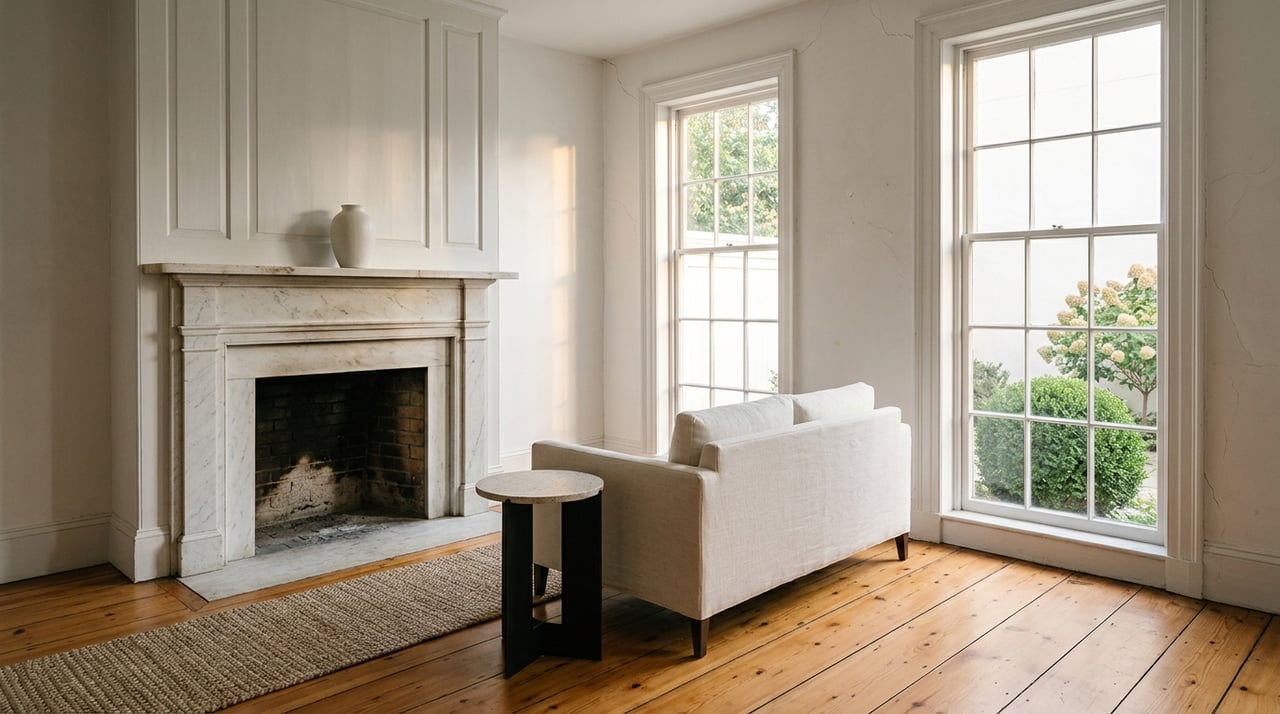
Listing A Historic Marblehead Home With Modern Marketing
June 11, 2026
June 11, 2026
If you own a historic home in Marblehead, you may wonder how to showcase its age, detail, and story without making it feel dated online. That balance matters because today’s buyers often fall in love on a screen first, yet they are still drawn to the kind of character that only an older home can offer. When your property has period features and local history, the right listing strategy should protect its identity while giving buyers the clarity they expect. Let’s dive in.
Marblehead has a preservation setting unlike many communities, and that shapes how buyers see older homes here. The town has two local historic districts, Old Town and Gingerbread Hill, and the local historic review system is separate from the National Register Historic District.
That distinction matters when you prepare to sell. A home may carry historic significance, but local district status can also affect what kinds of exterior changes require review before you list.
For sellers, this creates an opportunity. In Marblehead, preserved details are often part of the value story, not a problem to explain away.
Many buyers still prefer existing homes because of overall value, price, and charm. For a Marblehead antique or period home, that means original millwork, antique flooring, fireplaces, multi-pane windows, and a distinctive streetscape can strengthen buyer interest when they are presented clearly.
Instead of marketing your home as a project or a blank slate, a stronger strategy is often to show how its history and livability work together. Buyers want to understand both the romance of the property and the practical reality of living there.
Before you paint, repair, replace, or update anything visible from the exterior, confirm whether your property falls within one of Marblehead’s local historic districts. Under the local bylaw, if only part of a building falls inside the district boundary, the full land area occupied by that building is treated as within the district.
That means assumptions can create risk. It is wise to verify district status early, then build your pre-listing plan around what is actually allowed and what may need review.
Historic homes benefit from a more careful pre-listing process than a typical property. In Marblehead’s Old and Historic Districts, a certificate of appropriateness may be required for exterior architectural features, additions, restorations, moves, demolitions, and signs.
Applications can require substantial detail, including materials, trim, gutters, windows, doors, roof pitch, dimensions, photographs, and in some cases drawings or scale plans. For that reason, a smart seller starts by documenting the home’s visible exterior elements before making changes.
Not every task triggers formal review. Marblehead’s rules identify some ordinary maintenance and repair, certain temporary items, and a small real estate sign of not more than three square feet as features that do not require a certificate.
Still, the line between maintenance and a visible exterior change is not always obvious in an older home. If you are considering painting, window work, updated trim, new signage, or another exterior-facing improvement, it is worth confirming whether review is needed before photography and marketing begin.
A well-prepared historic listing is stronger when the supporting documents are ready from day one. Helpful materials can include:
This does two things at once. It helps your listing tell a more credible story, and it makes it easier to respond when buyers ask detailed questions.
A historic home often comes with a longer list of records and buyer questions, especially in Massachusetts. Sellers benefit from organizing these items before the property goes live.
For homes built before 1978, Massachusetts and federal law require the Property Transfer Lead Paint Notification before the purchase contract is signed. The state also maintains searchable lead-history records through CLPPP, which can be useful when gathering your file.
Massachusetts also requires a separate written home-inspection disclosure before or at the first purchase contract for most residential sales after October 15, 2025. The current state form says the buyer may choose a licensed home inspector, the seller may not condition acceptance on waiving the inspection, and the buyer should have a reasonable period after contract execution to decide whether to proceed based on the results.
Massachusetts guidance for ordinary residential sellers does not create a broad affirmative disclosure duty beyond lead paint in the way some sellers expect. Even so, older homes tend to generate more questions about systems, repairs, and past work.
That is why preparation matters. When you have reports, records, and repair history organized upfront, your listing feels more transparent, and buyers can evaluate the home with greater confidence.
Historic homes need more than pretty photos. They need marketing that preserves character while making the home easy to understand for buyers who may be comparing it with newer properties online.
That approach matters because the search is now deeply digital. Recent buyer data shows that 43 percent of buyers first looked online for properties for sale, 51 percent found the home they purchased on the internet, and 83 percent of internet users said photos were a very useful website feature.
For a historic Marblehead property, buyers usually want two things at once: emotional appeal and practical clarity. Strong marketing assets help deliver both.
The most useful tools often include:
This is especially important when your likely buyer may be coming from outside the immediate area. If they cannot tour right away, your digital presentation needs to do more of the early work.
A historic home does not stand alone. Buyers also respond to context, and buyer research shows that many place high value on neighborhood quality and convenience to friends and family.
In Marblehead, that means your listing story should connect the home to its surrounding streetscape, harbor setting, and walkable local context where relevant. The goal is not to overstate lifestyle claims. It is to help buyers understand how the home fits into the fabric of Marblehead.
Staging can be especially useful when a home has strong architectural personality. Buyers need help seeing how historic details and modern living can work together.
Recent industry data found that staging affected at least some buyers in a majority of cases, while only a small share said it had no effect. For a Marblehead period property, thoughtful staging can soften awkward room assumptions, improve scale, and highlight features without competing with them.
A successful historic-home campaign should feel polished, accurate, and highly intentional. It should not strip away the age of the home or treat history as a gimmick.
Instead, the best modern marketing usually includes a few core elements working together.
Sellers often care most about marketing quality, competitive pricing, and selling within a specific timeframe. Historic homes are no exception.
The right launch plan should account for the home’s condition, level of documentation, exterior review needs, and the kind of buyer most likely to respond. That helps you avoid rushing to market before the story and presentation are fully ready.
Historic homes reward careful narrative work. If town records, inventory materials, old photographs, or prior restoration details are available, those details can support a more memorable listing description and stronger positioning.
The key is accuracy. You want a story that is grounded in records and visible features, not one built on assumptions.
Because so many buyers begin online, broad distribution matters. This is particularly true for Marblehead’s coastal and historic homes, which can appeal to local movers, Boston-area buyers, and out-of-state second-home shoppers.
A high-level campaign should meet buyers where they are first looking, with presentation that is refined enough to compete beyond the immediate neighborhood.
If you are getting ready to list a historic Marblehead home, this checklist can help you prepare:
Selling a historic home in Marblehead is not just about putting a property on the market. It is about understanding local preservation context, preparing the home with care, and presenting it with the kind of storytelling today’s buyers expect.
When that process is done well, your home’s age becomes an advantage. Its details feel intentional, its documentation builds trust, and its digital presence helps buyers appreciate what makes it distinct.
If you are considering selling a historic home in Marblehead, Michael Cannuscio can help you prepare, position, and market your property with a red-carpet approach tailored to the North Shore.

We pride ourselves in providing personalized solutions that bring our clients closer to their dream properties and enhance their long-term wealth. Contact us today to find out how we can be of assistance to you!
THE AGENCY MARBLEHEAD
72 Front Street, Suite 6, Marblehead, MA 01945