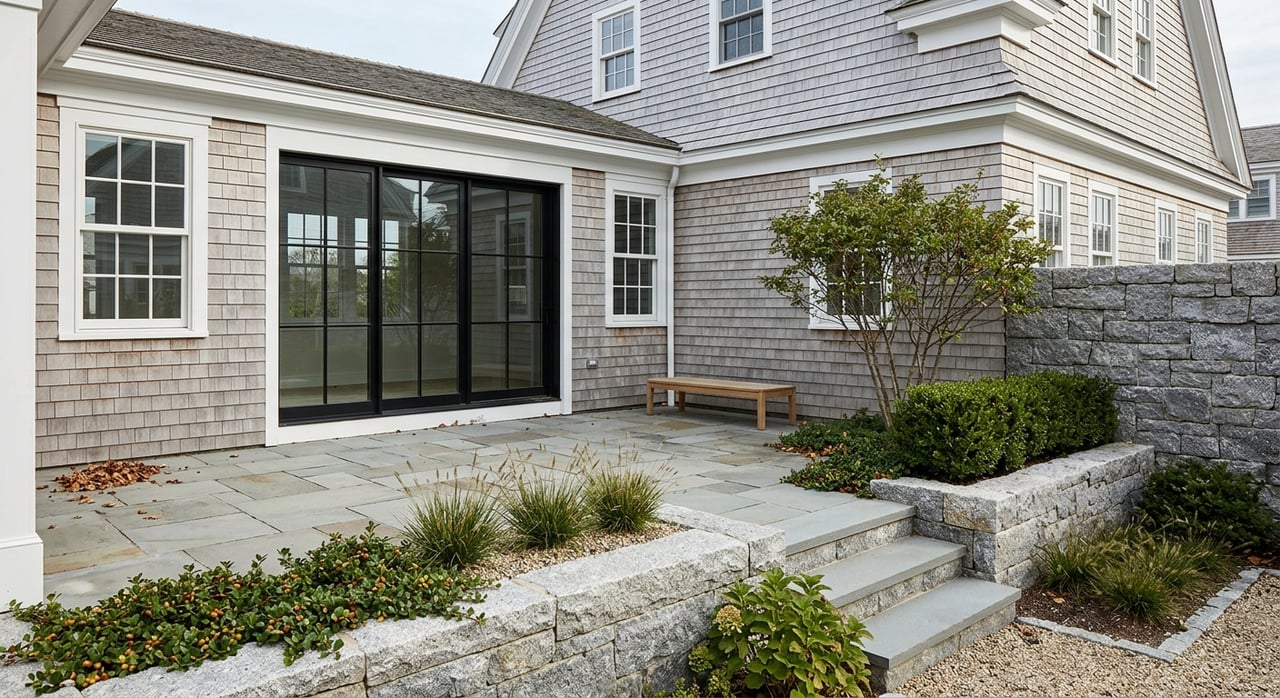
Rockport Or Gloucester? Choosing Your North Shore Home Base
May 28, 2026
May 28, 2026
Trying to choose between Rockport and Gloucester can feel harder than it should. Both sit on Cape Ann, both give you coastal beauty and commuter rail access, and both offer that unmistakable North Shore pull. But once you look past the shared shoreline, the ownership experience starts to look very different. If you want to know which town better matches your lifestyle, budget, and long-term plans, this guide will help you sort through the tradeoffs. Let’s dive in.
Rockport and Gloucester are connected by Route 127, Route 127A, and the MBTA Newburyport/Rockport Line. On paper, that makes them close neighbors with similar regional access. In practice, they deliver two distinct versions of Cape Ann living.
Rockport is the smaller and more preservation-focused community. Gloucester is the larger coastal city, with a broader housing mix and a more visible working waterfront identity. If you are deciding between the two, the right answer often comes down to whether you want a more compact, curated home base or a more varied, service-rich one.
Rockport is a tighter and more premium market. Census data shows a 68.3% owner-occupied housing rate, a median owner-occupied home value of $746,100, and a median household income of $96,250.
That profile supports what many buyers already sense when they start browsing homes here. Rockport tends to offer a more limited supply, with pricing that reflects its strong appeal as a coastal destination and year-round community.
Gloucester is still expensive by Massachusetts standards, but it is somewhat more accessible than Rockport. Census data shows a 63.9% owner-occupied housing rate, a median owner-occupied home value of $600,600, and a median household income of $83,883.
The city also reports a more diverse mix of housing types. Its housing materials note an aging housing stock, more two-family and 3 to 4 family units than many North Shore communities, and a majority of homes built before 1939.
If your priority is housing variety, Gloucester may give you a wider field to work with. Its larger housing base and broader range of property types can create more flexibility across neighborhoods and price points.
If your priority is a smaller, more tightly defined coastal market, Rockport may feel more aligned. Buyers there are often choosing a specific setting and atmosphere, not just a home.
Rockport has four historic districts, and the town’s Historical Commission states that changes to properties within those districts may be limited by design guidelines and preservation rules. That matters if you are buying a historic home, planning renovations, or simply want to understand what ownership could look like over time.
For some buyers, these rules are part of the appeal. They can help preserve the visual character that makes Rockport so distinctive. For others, they may require more planning and patience before making exterior changes.
Gloucester also has significant historic character, but the research provided here points more strongly to its diversity than to a single preservation-centered identity. The city’s housing stock includes many older homes, but the overall feel is broader and more layered.
That can make Gloucester appealing if you want coastal history without the same level of emphasis on one village-style environment. You may find a wider mix of building types and ownership experiences depending on where you search.
Rockport’s 2026 planning board report says the state designated the town as a Seasonal Community. The report says more than 12.5% of the town’s housing stock is used for seasonal, occasional, or recreational use or is otherwise not a primary residence, and that short-term rentals exceed 3.25% of the housing inventory.
This shapes the local housing conversation in an important way. Rockport’s Affordable Housing Trust has said its goal is to increase housing options and preserve a diverse mix of year-round residents, which shows how closely the town is balancing vacation appeal with full-time livability.
Gloucester also has a higher-than-average share of seasonal units, according to its housing plan. Still, the city’s larger size and more varied housing stock support a broader year-round ownership experience.
If you want a coastal home base that feels active across more neighborhoods and property types, Gloucester may offer more flexibility. If you are drawn to a place where seasonal use is a more visible part of the housing story, Rockport stands out.
Rockport is especially beach and harbor oriented. The town lists six municipally owned beaches: Long Beach, Cape Hedge Beach, Pebble Beach, Old Garden Beach, Front Beach, and Back Beach.
The town says its public beaches are tested regularly during summer and generally test safe for swimming, with caution advised near creeks and streams after heavy rain. Rockport’s Harbormaster oversees four harbors and more than 360 vessels, with about one-third of them commercial fishing vessels.
That combination gives Rockport a distinctly small-harbor maritime feel. If you picture a more compact shoreline lifestyle with recognizable beach access points and a close-knit harbor setting, Rockport fits that image well.
Gloucester offers a broader menu of beaches. The city highlights Good Harbor Beach, Wingaersheek Beach, Half Moon Beach, Niles Beach, Cressy’s Beach, Pavilion Beach, and Plum Cove Beach.
City materials also point to harbor cruises, whale watching, kayaking, and coastal trails. Good Harbor and Wingaersheek are especially large and popular sand beaches, with summer-managed access and nonresident parking reservations.
The difference is less about whether either town has water access and more about scale. Rockport feels more compact and harbor-centered. Gloucester feels bigger, busier, and broader in the range of coastal experiences available to you.
Rockport’s cultural identity is tied closely to the arts and to preservation. Town materials note that residents and visitors come to vacation, paint, and walk the beaches, and local planning materials describe downtown as home to art galleries, restaurants, bakeries, retail, and the Shalin Liu Performance Center.
The Rockport Art Association & Museum describes its mission as fostering the creation and appreciation of fine arts. Altogether, that supports a lifestyle that feels polished, scenic, and intentionally preserved.
Gloucester presents a broader and more public-facing cultural identity. The city’s Committee for the Arts was created by ordinance to celebrate local art and artists, and Rocky Neck Art Colony is described as a historic waterfront district with galleries, working artists, and strong creative energy.
The city also frames itself around a blend of beaches, arts, shopping, dining, whale watching, and harbor experiences within a historic working waterfront. If you want a coastal setting with more layers of activity and a stronger city feel, Gloucester may be the better match.
A Boston Region MPO study describes Route 127 as a major state route running through Gloucester and into Rockport, with Route 127A serving as the coastal alternative between the two. The same study identifies the MBTA commuter rail line as the major regional transit service, with stations in both Gloucester and Rockport.
For most buyers, access is not the deciding factor between these towns. Both can work for Boston-bound travel. The more important question is what kind of daily setting you want to come home to.
Rockport tends to appeal to buyers who want:
If charm, privacy, and an established small-town identity are high on your list, Rockport may feel especially compelling.
Gloucester tends to appeal to buyers who want:
If you want Cape Ann living with more range and less emphasis on a single village feel, Gloucester may be the more practical fit.
If you are choosing between Rockport and Gloucester, the best answer depends on how you want coastal life to feel once the novelty wears off and daily life begins. Rockport offers a more compact, preservation-minded, and seasonally influenced setting. Gloucester offers a larger, more flexible, and more varied coastal city experience.
Neither is better in a universal sense. The goal is to match the town to the way you actually want to live, whether that means a curated harbor backdrop, a wider range of housing options, or a home that supports weekend escapes and year-round routines alike.
If you want help comparing coastal homes, historic properties, or second-home opportunities on the North Shore, Michael Cannuscio can help you evaluate the lifestyle and market differences with a local, high-touch approach.
We pride ourselves in providing personalized solutions that bring our clients closer to their dream properties and enhance their long-term wealth. Contact us today to find out how we can be of assistance to you!
THE AGENCY MARBLEHEAD
72 Front Street, Suite 6, Marblehead, MA 01945